As part of our “Trainings” work package, the DKZ.2R plans to curate and provide a variety of trainings, seminars and courses. We will start by offering an official The Carpentries Workshop on the 21st and 22nd of November 2024 on the topic of “plotting and programming in Python”. The Carpentries Workshop by DKZ.2R: Python basics and plotting The workshop will be hosted on-site at RWTH Aachen University and is open for up to 25 participants. The workshop material is available online and will be presented by official carpentry instructors who will walk you through the steps and are available for questions the whole time. The course is teaching the very basics of Python and although some experience with other scripting/programming languages is beneficial, no prior knowledge is required for the course. Furthermore, the event is open for participants from all domains. If you are interested in taking part in the workshop you can sign up here.
Related Posts

How To: Open Science

How To: Open Science

Tired of Recreating someone else’s work? - How Open Science can accelerate research and overcome reinvention

Have you ever found papers on algorithms but their implementation is missing? Found an interesting analysis but there is no way to check the results, as you don’t have access to the data they were derived from? Ever thought you had a great idea for a project, just to find out a year later that you are not the only research group following that specific idea? Not having access to other people’s code, data, metrics or even their plans for research projects often leads to unnecessary delays and scientific redundancies. There is an easy solution to overcome (almost) all of these issues. It’s called Open Science! What is Open Science? The UNESCO defines Open Science as a construct of “movements and practices aiming to make multilingual scientific knowledge openly available, accessible and reusable for everyone, to increase scientific collaborations and sharing of information for the benefits of science and society, and to open the processes of scientific knowledge creation, evaluation and communication to societal actors […]”. To ensure that everyone has access to scientific knowledge and infrastructure, Open Science focuses on four main concepts.

Read More
A Survival Guide to Research Data Sharing Services in the Rhine-Ruhr Region

A Survival Guide to Research Data Sharing Services in the Rhine-Ruhr Region

A Survival Guide to Research Data Sharing Services in the Rhine-Ruhr Region

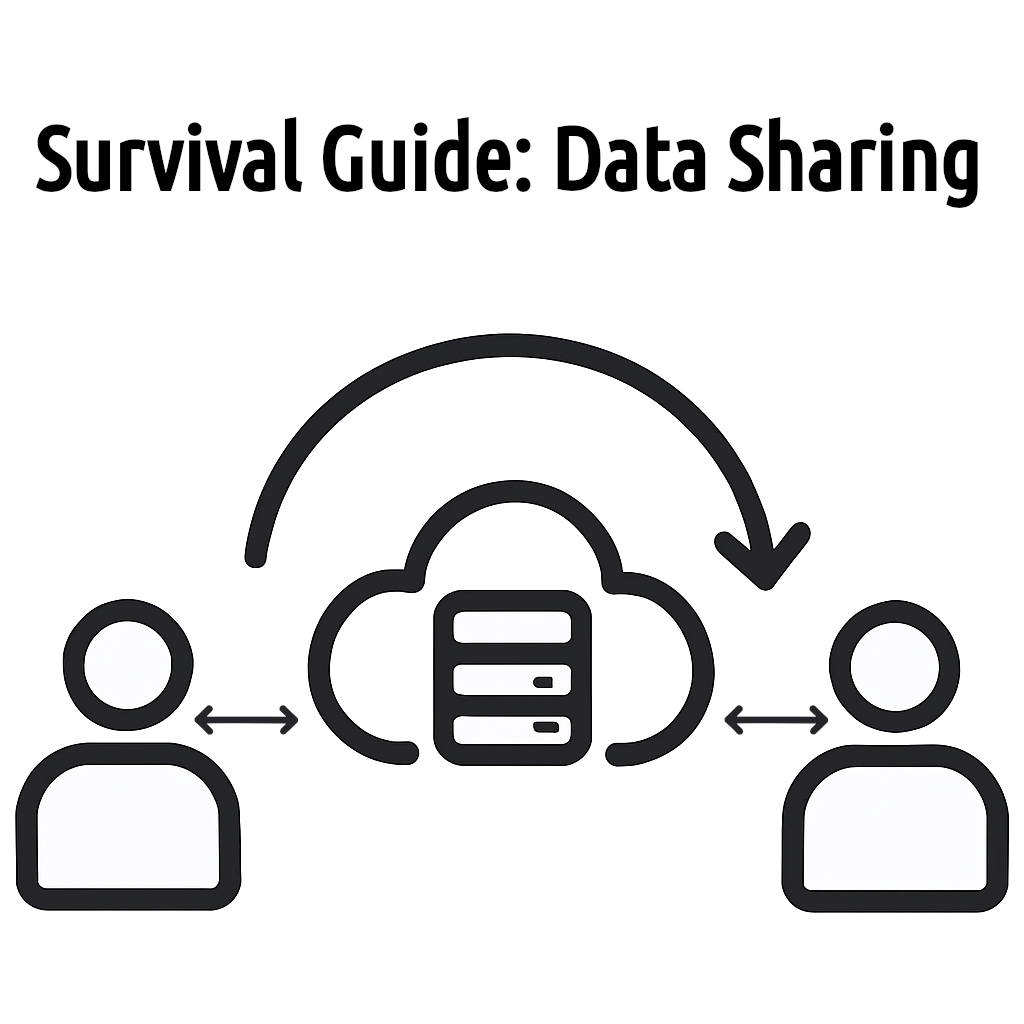
There are a lot of reasons why collaborating with other researchers on scientific projects is great! It provides new perspectives and gives you the chance to benefit from other people’s knowledge and input. When it comes to sharing and exchanging data across multiple locations and devices however, researchers are often disoriented and don’t know which tools, cloud services and so on are safe to share data in a secure and ethical way.

Read More
Comments on Collaboration - My Experience with the DKZ.2R Rent-an-Expert Program

Comments on Collaboration - My Experience with the DKZ.2R Rent-an-Expert Program

Comments on Collaboration - My Experience with the DKZ.2R Rent-an-Expert Program

At the beginning of this year (2025), I received an email regarding the DKZ.2R “Rent an expert” program. I was very interested in this initiative and therefore applied for support from the scientific consulting team at the Rhine-Ruhr Center for Scientific Data Literacy (DKZ.2R) for assistance with my data analysis.

I obtained my master’s degree in Plant Nutrition from the China Agricultural University and pursued my PhD study at the University of Hohenheim. I am currently a postdoctoral researcher in the Institute of Crop Science and Resource Conservation, Crop Functional Genomics, at the University of Bonn.
My research expertise includes plant culturing, molecule cloning, biochemical analysis and limited data analysis experience on large-scale NGS datasets.
Since the beginning of April 2025, two DKZ.2R consultants were assigned to me: Tarek Iraki, who is proficient in programming languages such as Python, and Lennard Maßmann, who specializes in working with R. Together, we collaboratively worked on my Postdoctoral project, which focuses on the molecular and genomic dissection of lateral root development in maize.

Read More