
Comments on Collaboration - My Experience with the DKZ.2R Rent-an-Expert Program
- Y. Zhou
- Data , Testimonial
Comments on Collaboration - My Experience with the DKZ.2R Rent-an-Expert Program
At the beginning of this year (2025), I received an email regarding the DKZ.2R “Rent an expert” program. I was very interested in this initiative and therefore applied for support from the scientific consulting team at the Rhine-Ruhr Center for Scientific Data Literacy (DKZ.2R) for assistance with my data analysis.
I obtained my master’s degree in Plant Nutrition from the China Agricultural University and pursued my PhD study at the University of Hohenheim. I am currently a postdoctoral researcher in the Institute of Crop Science and Resource Conservation, Crop Functional Genomics, at the University of Bonn.
My research expertise includes plant culturing, molecule cloning, biochemical analysis and limited data analysis experience on large-scale NGS datasets.
Since the beginning of April 2025, two DKZ.2R consultants were assigned to me: Tarek Iraki, who is proficient in programming languages such as Python, and Lennard Maßmann, who specializes in working with R. Together, we collaboratively worked on my Postdoctoral project, which focuses on the molecular and genomic dissection of lateral root development in maize.
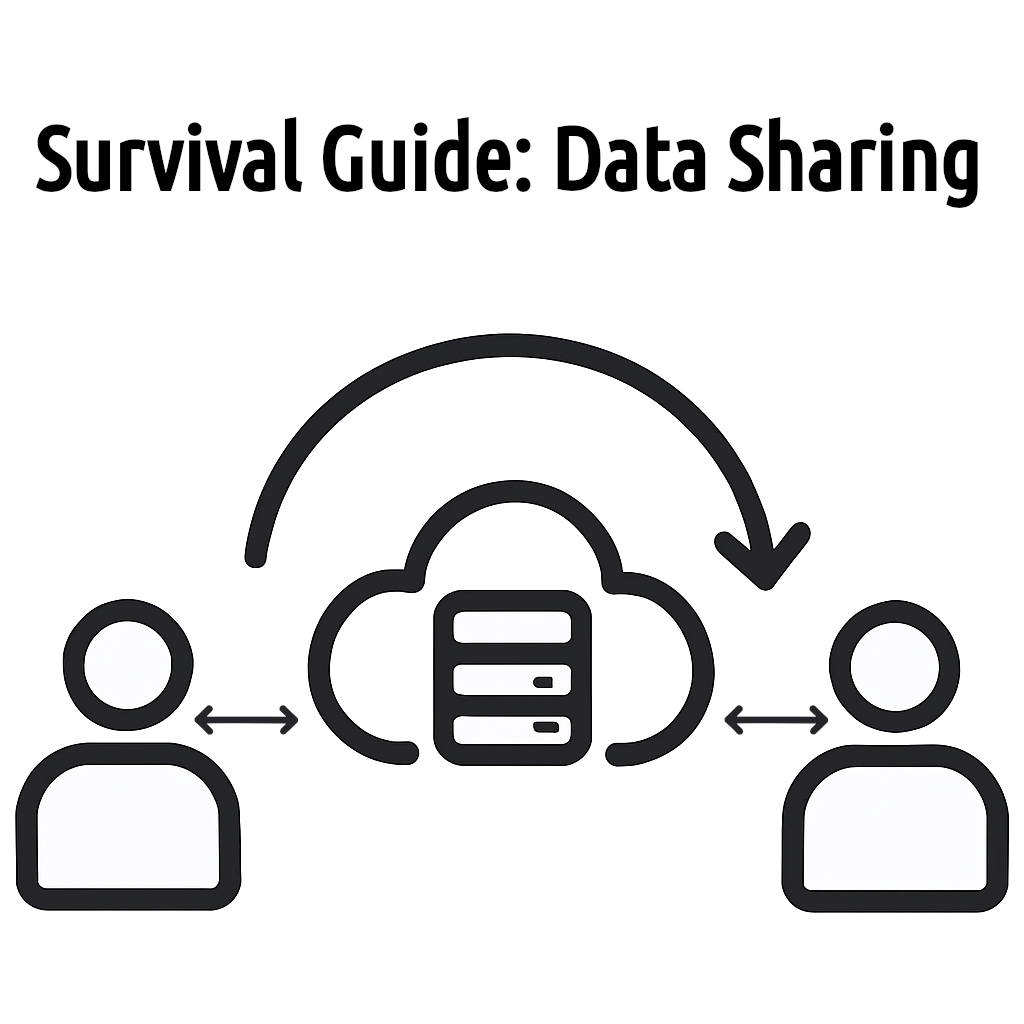
A Survival Guide to Research Data Sharing Services in the Rhine-Ruhr Region
- A. Janz
- Data , RDM , Data Sharing
A Survival Guide to Research Data Sharing Services in the Rhine-Ruhr Region
There are a lot of reasons why collaborating with other researchers on scientific projects is great! It provides new perspectives and gives you the chance to benefit from other people’s knowledge and input. When it comes to sharing and exchanging data across multiple locations and devices however, researchers are often disoriented and don’t know which tools, cloud services and so on are safe to share data in a secure and ethical way.
Read More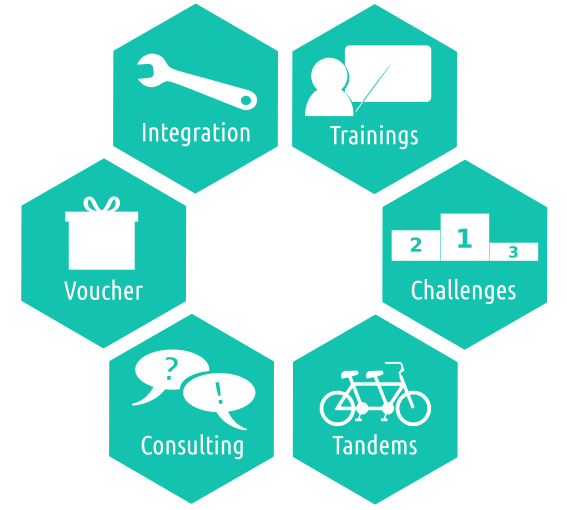
Do's and Don'ts in Research Data Management
Research Data Management Do’s and Don’ts - Step up your RDM skills!
1. Structuring and naming your folders There is an easy way to make your data findable for you and your team: establish a folder structure which makes sense for you and your working group as well as naming conventions for your folders.
Don’t:
Paul and Suzie
»Guideline
>application
»version2_final
»v.3
»review
»3rd.version
>JD
»qn
»0-1
Instead do:
000_int_orga
Read More
»01_application
»02_review 120_questionaires
»01_qualitative »02_quantitative 130_data
»01_qualitative »02_quantitative
How To: Open Science
- A. Mielke
- Data , RDM , Open Science
Tired of Recreating someone else’s work? - How Open Science can accelerate research and overcome reinvention
Have you ever found papers on algorithms but their implementation is missing? Found an interesting analysis but there is no way to check the results, as you don’t have access to the data they were derived from? Ever thought you had a great idea for a project, just to find out a year later that you are not the only research group following that specific idea? Not having access to other people’s code, data, metrics or even their plans for research projects often leads to unnecessary delays and scientific redundancies. There is an easy solution to overcome (almost) all of these issues. It’s called Open Science! What is Open Science? The UNESCO defines Open Science as a construct of “movements and practices aiming to make multilingual scientific knowledge openly available, accessible and reusable for everyone, to increase scientific collaborations and sharing of information for the benefits of science and society, and to open the processes of scientific knowledge creation, evaluation and communication to societal actors […]”. To ensure that everyone has access to scientific knowledge and infrastructure, Open Science focuses on four main concepts.
Read More
How To: Good Scientific Practice
- C. Hillen
- Data , RDM , good scientific practice
“Scientific integrity forms the basis for trustworthy research”, so it says in the Guidelines for Safeguarding Good Research Practice of the DFG, the German Research Foundation. As a major funder of research in Germany the DFG, as well as many other funders of research in Germany and the European Union, requires researchers to follow a certain set of rules conducting their research. These rules are called “good scientific practice” and have to be followed by researchers to be viable for funding. According to the guidelines researchers are required to “document all information relevant to the production of a research result as clearly as is required by and is appropriate for the relevant subject area to allow the result to be reviewed and assessed”. But good scientific practice is not done by documenting your research. It also includes i.a. protecting the personality rights of your subjects and handling research data in an appropriate manner by e.g. “back(-ing) up research data and results made publicly available, as well as the central materials on which they are based and the research software used, by adequate means according to the standards of the relevant subject area, and retain them for an appropriate period of time.” This is where Research Data Management (RDM) comes in. Of course RDM is much more than just creating a backup of your data on a USB-Stick and handing it over to anyone asking for it. “Good scientific practice” in RDM follows the FAIR principles:
Read More
Call for participation
Call for participation!
The Data Literacy Center Rhine-Ruhr (DKZ.2R) issues a call for participation in its “rent-an-expert” project! We offer support for ambitious research projects of PhD students and early postdocs dealing with Data Science and Artificial Intelligence, High Performance Computing and Simulation, and Research Data Management. As the DKZ.2R is funded by the German Federal Ministry of Education and Research (BMBF) as well as the EU, this offer is free of charge!
Read More
Announcement - Call for participation
Update (June 24, 2024)
The call for participation is now open! Read more
Upcoming!
The Data Literacy Center Rhine-Rhur is issuing a call for participation in its “rent-an-expert” project! This is a great opportunity for PhD students and early postdocs who are working on research projects that involve data science, artificial intelligence, high performance computing and simulation, to get free support from our expert consultants.
Support can take the form of short- or long-term consulting, depending on the needs of the project. More info will be available shortly!
Read More